

Milling, screening, and delumping can easily be thought of as three separate processes, in part because each of them performs a different material-processing duty. The on site reality, however, is that they are joined by the fact that the material needs to pass without hesitation from one operation to another without being overly exposed or results from one step affecting the wider process.
Thinking of each process separately introduces many handling and storage considerations with each one creating another high-risk moment during which powder could escape, or contaminants could enter.
A single contained powder-processing solution, then, should be designed around the material’s journey from start to finish. This guide explains how to define each role and connect them before committing to a production-scale line.
Start with the required powder transformation, not the equipment list
Decide what needs to change between the incoming material and the powder subsequently delivered to the next process before selecting the type of equipment. Extracting foreign material and breaking down weak agglomerates, for example, are two different duties and would need different solutions.
The incoming powder can be characterized in practical terms so that engineers can determine whether it contains fragile clumps or a broad particle-size distribution that must be narrowed. Requirements further down the production line also matter as much as the condition of the feed too, when selecting what equipment is needed.
Material entering a blender may require security screening, while a higher value ingredient may need a more tightly controlled particle size.
Not every process line will require cone milling, sieving, and delumping. By starting with the equipment list rather than what the powder needs, firms run the risk of adding unnecessary processing stages which only serve to increase cleaning work and expose the product to more mechanical energy.
The final process specification should clearly illustrate what each stage is expected to remove, separate, or reduce. Only then can the team have a clearer basis for selecting equipment and determining whether the integrated line performs as they wish.
Give every stage one clearly defined job
Use security screening to protect the downstream process
Security screening prevents unwanted foreign materials or oversize particles from continuing through the process. Centrifugal sifters such as the FlexSift can separate weak agglomerates as the powder passes through the screen. FlexSift is an inline system used for security screening and gentle deagglomeration and can be installed beneath related equipment such as bag-dump stations.
Use delumping when agglomerates need separating, not grinding
Lumps aren’t just oversized particles, they can also be loose agglomerates that have formed during storage or upstream in the process. The aim of delumping is to separate the agglomerate without applying any additional energy and to preserve the existing particle structure. Harder agglomerates might need a more assertive milling action, which can be confirmed through material testing.
Use conical milling for controlled particle sizing
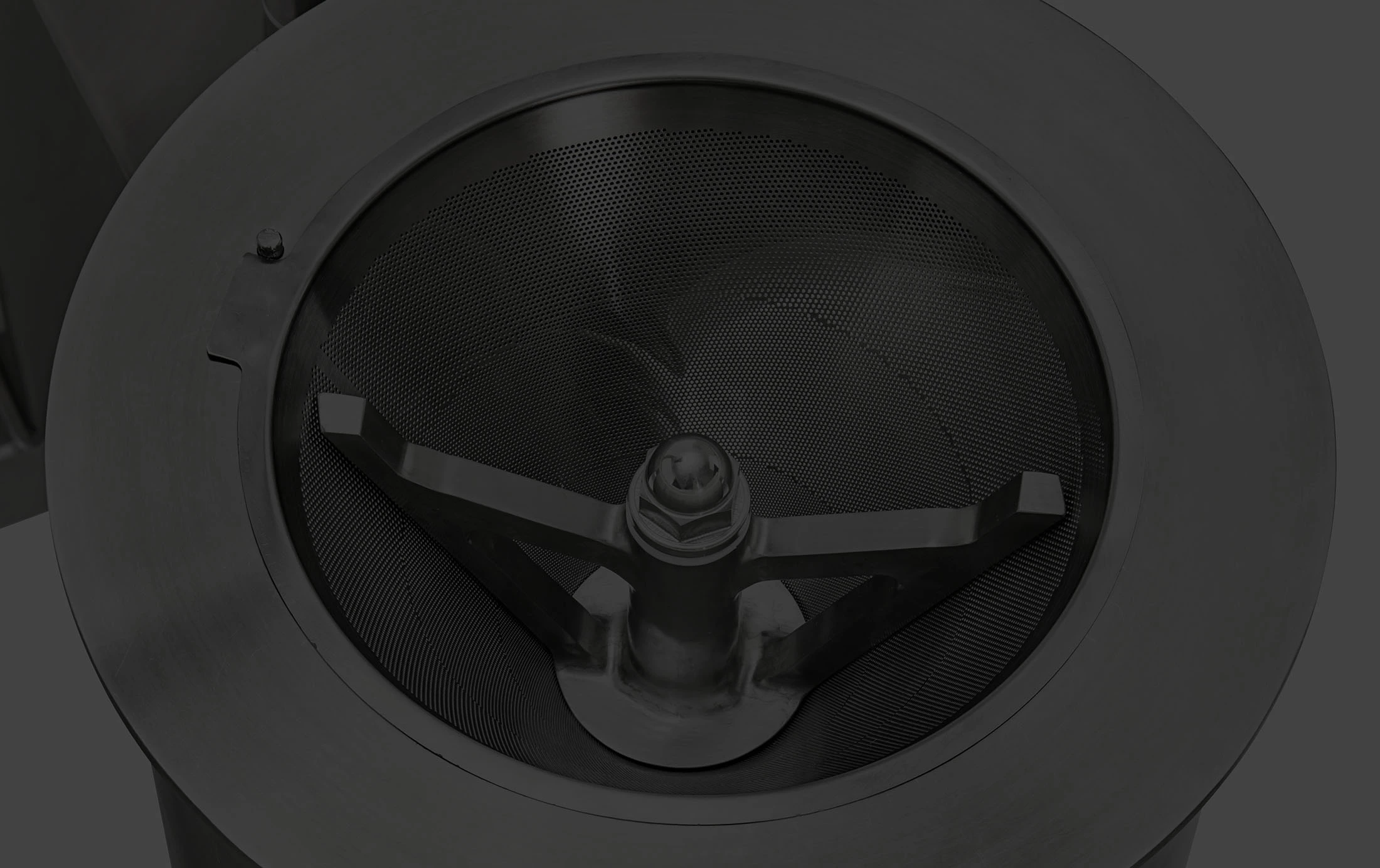
A conical mill performs controlled size reduction by moving material against a fixed conical screen. Particles are reduced in size before passing through selected openings. Quadro’s Comil can be used for this exact process, and if a finer grind is needed, Fitzpatrick’s D6Ax FitzMill can provide the required reduction.
Sequence the operations around the material flow
The correct sequence usually depends on what must be removed before the powder reaches the next stage.
Security screening may be placed early in the process to check ingredients before they enter valuable or hard-to-clean equipment. Gentle delumping may precede milling if loose agglomerates would create an inconsistent feed for this downstream process. This can allow the milling stage to concentrate on material that is genuinely oversized.
In another application, there may be a final security screen after milling so that potential foreign objects that entered the product during processing or transportation are removed, as well as deagglomerating soft lumps that form after milling. Whatever the sequence, it must be justified by the identified process risk.
In terms of transport, gravity-fed arrangements can reduce the need for specific transfer equipment provided the building layout and receiving equipment allow for it. If gravity is not a practical option, then the alternative transfer method should maintain a stable feed while preserving the intended containment boundary.

Design containment through the connections, not only the machines
Just because equipment is contained doesn’t mean a contained powder-process has automatically been created. The entire process includes not only the equipment but other parts such as these:
- Feed connection
- Transitions between machines
- Discharge arrangement
- Points where an operator opens or cleans the system
Gravity-assisted tipping between separate operations can release dust, and while integrating the stages can remove some of these interactions, this only happens when the connections are designed for the material and relevant exposure controls.
The hazardousness of a powder will also influence how the system is charged, the powder is transferred, and the equipment is maintained. The containment requirements for the powder should be defined before equipment selection so that any new element of the contained powder-processing solution is up to standard.
And while Occupational Exposure Banding (OEB) can help illustrate the containment level, it alone is not a complete engineering specification, and any project team must define the exposure limit more accurately.
Make cleaning and changeover part of the process design
The benefits of a compact, connected process include a reduction in open handling, but that should not mean that engineers can’t inspect and clean key product-contact areas with ease. Connections which help sustain smooth production should not then make future disassembly awkward.
Any long-term cleaning strategy should evolve alongside the equipment arrangement. Engineers should know which parts will be removed and how exposure will be controlled when the system is opened.
The scale of the interfaces can affect changeover time, too, as every connection point may require cleaning and reassembly. Any additional connections, then, should come with a clear explanation as to their purpose within the process.
Necessary Current Good Manufacturing Practices (CGMP) can and should be addressed through hygienic design and a validated site-specific procedure for how the equipment will be disassembled and cleaned. Simply purchasing compliant equipment doesn’t automatically make the process compliant without further qualification.
Validate the integrated process before fixing the production design
Testing one machine's suitability to process a given material does not demonstrate how the entire sequence will behave. Any trial should investigate key factors like resulting PSD or throughput at every relevant stage to provide as accurate a picture as possible of how the integrated process affects the behavior of the powder.
At Quadro, our Waterloo Technology Centre gives customers access to lab and production-scale equipment that can aid real-world powder trials. This facility supports the scale-up of individual processes, from development right the way through to commercial production.
Test programmes should only start when pre-agreed acceptance criteria have been put in place, as powder that looks better visually may still not meet defined objectives.
Build a single solution using the right combination of technologies
The experts at Quadro can combine different particle-processing technologies rather than forcing every application through one machine. The Comil provides controlled conical milling while the FlexSift performs inline security screening and gentle delumping.
If the target PSD is beyond the reach of conventional conical milling, the Fitzpatrick D6Ax FitzMill can provide a dedicated fine-grinding stage. The true value of an integrated solution comes from assigning these technologies the correct duties and engineering interfaces so they help the plant do what it needs to do with its materials.
A solution may involve one, two, or all three technologies, with the aim being to create a shorter, complete process that reliably delivers the required result.
A successful contained line works as one process
Only ever combine milling, sieving, and delumping if each of the stages solves a defined process requirement. The strongest designs consider the incoming material and final goal before looking at the equipment.
By evaluating the complete powder journey, manufacturers can develop a line that's easier to control, operate, and adapt.