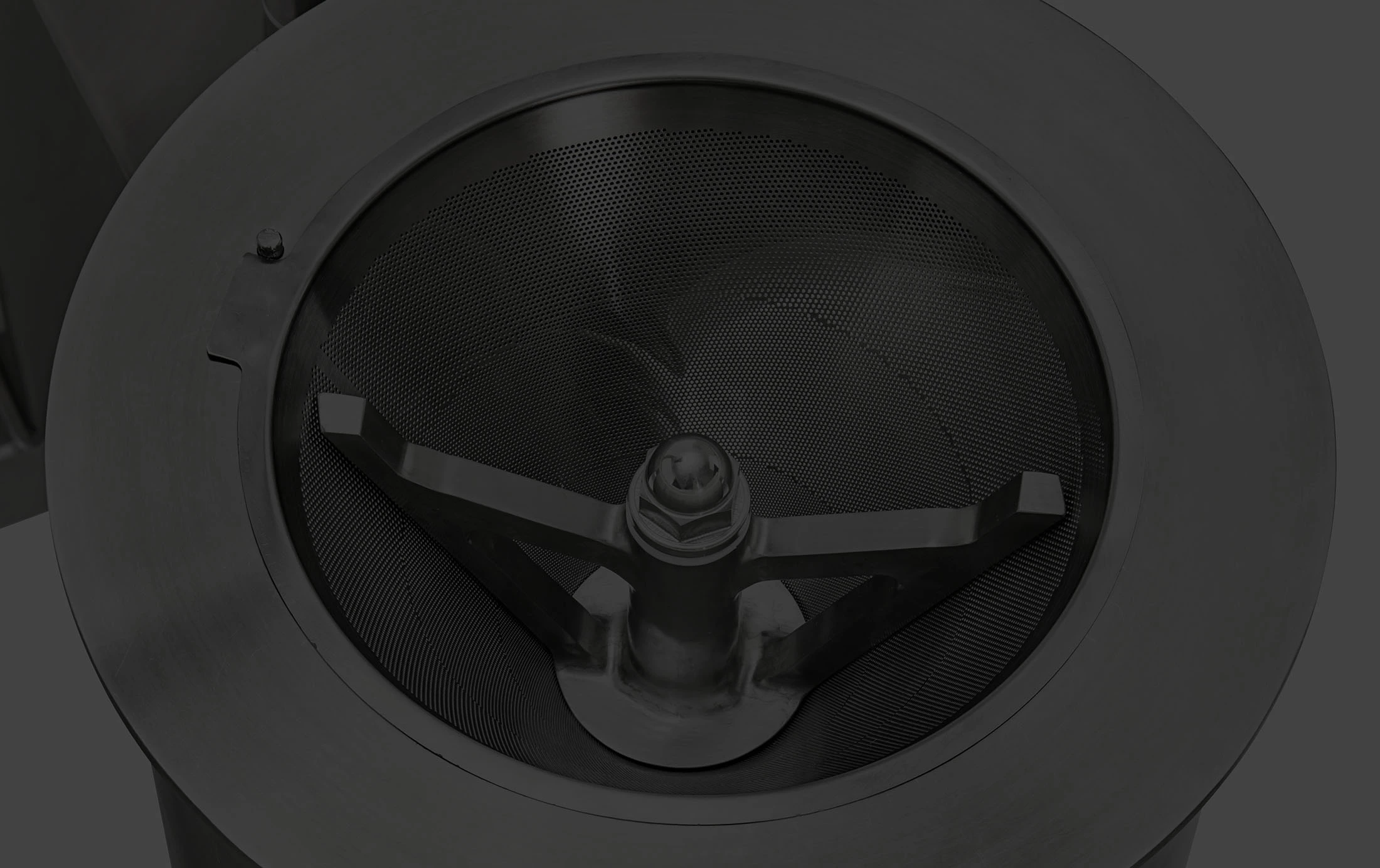


It doesn't take much for screen blinding to take effect. This issue can arise when only part of the screen becomes obstructed. And, as fewer openings remain available for material to pass through, throughput becomes unpredictable.
These visible blockages aren’t always the same, a particle wedged inside an aperture needs a different response to that of a sticky powder coating the screen surface.
While operators may use terms such as screen binding, clogging, and plugging differently, for the purposes of this guide, we’ll use them to describe the same operational problem, which is material obstructing screen openings and reducing the usable screen area.
In our latest guide, we’ll connect common causes with practical ways to reduce the risk of it returning.
What does screen blinding look like during a milling process?
Screens do not have to be completely blocked to affect the milling process. In fact, even partial blinding can progressively reduce the open area, leaving less space through which material can pass.
In fact, the most common form of screen blinding occurs when particles simply become lodged inside openings. More complex blinding issues might involve a stickier material adhering or smearing to the screen’s surface which covers the holes instead of blocking them.
The effects of these causes can be different but still indicate that the screen is blocked. One of the more visible warning signs may include a dip in production efficiency because blocked apertures are stopping products from moving through the mill screen. And, where this creates additional friction or extended residence within a milling process, any knock-on increase in temperature should be investigated.
What is causing your mill screen to blind or clog?
1. Near-size particles are becoming wedged in the screen openings
Particles which are close to the size of the screen aperture can settle into an opening without passing cleanly through it. As more apertures become occupied with powder, the available screen area falls, affecting throughput even though much of the screen looks perfectly usable.
Review the operating parameters to confirm if the aperture size is appropriate for the incoming particle distribution. Moving to a different opening size may reduce wedging, provided it does not compromise the target specification.
2. Moisture, fats or inherently sticky material are coating the screen
Some powders don’t neatly lodge into individual apertures, they adhere to the screen, covering apertures rather than wedging them closed. Resinous or fatty materials are two big causes of this form of blinding.
Selecting a large hole in these cases may not address the fundamental issue because the material is sticking to the surface, not the apertures. Scrutinizing the controllable material conditions before changing hardware will help to identify the main issue.
Product condition or moisture varies between successful and problematic batches and it’s that difference that can provide a useful starting point for the investigation.
3. The selected screen is poorly matched to the material
Selecting a screen involves more than finding one with the right size apertures. Factors such as hole shape and overall open area affect the ease with which material can move through the screen and the way it interacts with tooling
At Quadro, we offer different screen geometries including:
- Round
- Grater
- Square-holed
Each option should be treated as a tool that is selected based on the application rather than an interchangeable way of achieving the same result. If blinding repeatedly occurs when milling a particular material, review whether the screen geometry is encouraging the product to lodge or accumulate.
4. Operating conditions or worn tooling are changing how material reaches the screen
Optimal screen performance is not achieved by the screen alone. In a cone mill, the screen and impeller have an important relationship, and by changing certain parameters such as impeller speed can alter how the product interacts with the openings.
If a once reliable process begins experiencing screen binding without an obvious change in raw materials, then inspect the condition of the tooling and compare the current arrangement with previously successful operating conditions.
Replacing one component and failing to consider how it fits with the other may leave the underlying problem unresolved.

How can you prevent screen blinding before the next production run?
Effective prevention begins with data gathering. Recording what was different when the blockage appeared allows for more effective problem solving. Operating settings and the condition of the material provide more compelling evidence than noting that the screen required cleaning.
Where possible, avoid replacing a screen just because of the hole size. The right aperture geometry needs to ultimately support the required product result while still allowing the material to pass without constantly accumulating.
The condition of the screen should also form part of regular inspections. Wear can change how tooling performs in the mill, and even minor changes become significant when the screen and impeller are intended to operate with precision.
If sticky or fine powders repeatedly bind even when an appropriate setup has been configured, operators should consider whether the processing method itself is the limitation instead of continuing to optimize a configuration that remains prone to blockage.
Screen blinding prevention checklist
- Identify whether particles are wedged inside individual apertures or coating the screen surface.
- Compare the problematic material or batch with previous successful mill runs for relevant changes in product condition.
- Confirm that the fitted screen geometry and aperture size suit the material and required finished product.
- Inspect the screen and impeller for wear and confirm the correct tooling combination is installed.
- Check if the operating conditions have changed from a prior, successful setup.
- If repeated blinding persists with a material that's inherently sticky, assess whether another screening method is better suited.
Stop recurring screen blockage by finding the cause first
A blinded screen tells you that the material is no longer moving through the available openings as intended, but it does not necessarily tell you why.
A useful first step is to identify the pattern of failure because while wedged particles point toward a poor choice of aperture, material coating may indicate a stickiness problem that requires a different response entirely.
Application testing can remove some of the guesswork where screen choice, tooling condition, or the suitability of the processing method remain a mystery.