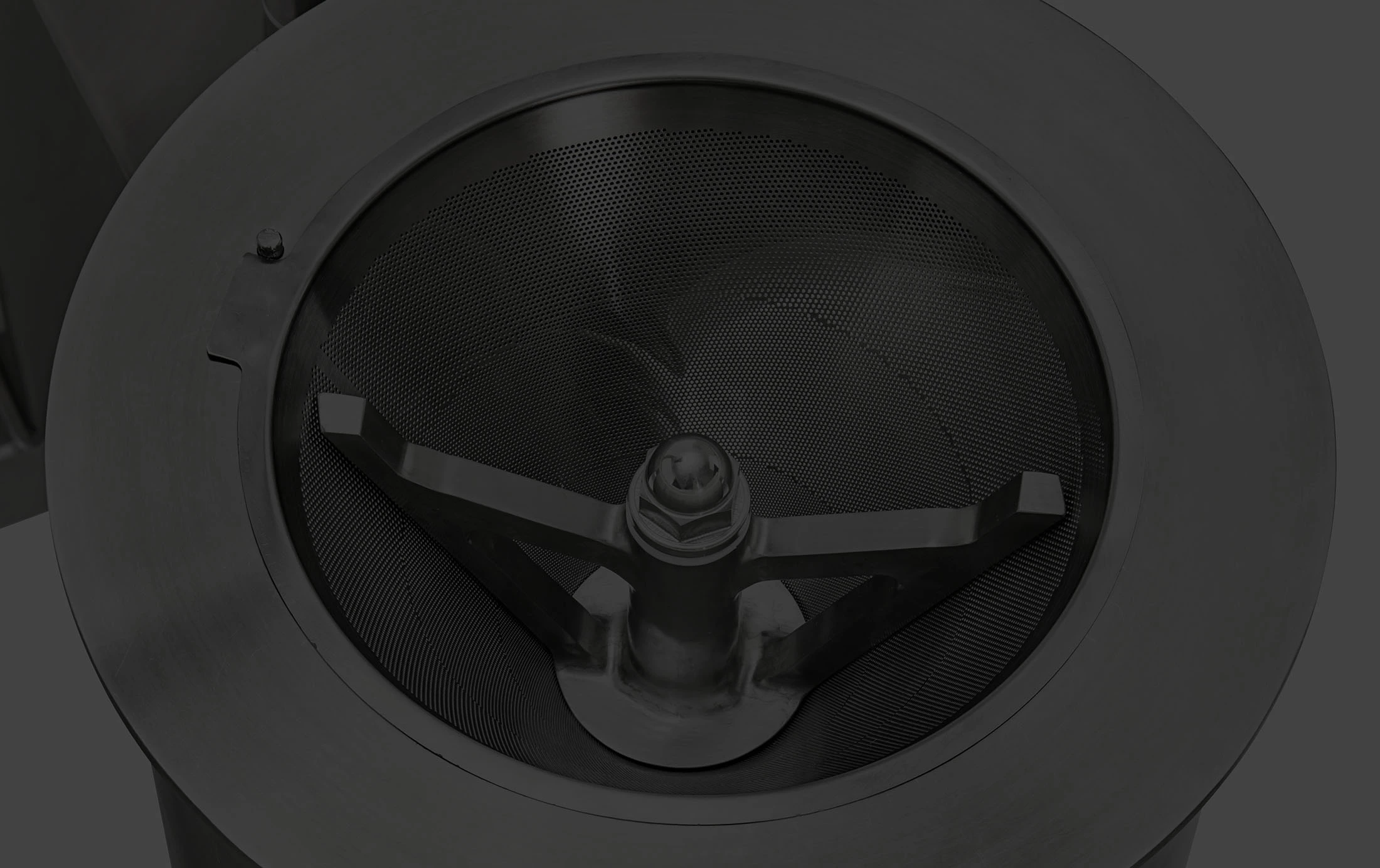


Powder processing solutions play an essential role in oral solid dosage manufacturing. The quality of powder processing has a direct impact on tablet and capsule consistency throughout production, particularly in applications that require precise dosing and blend uniformity.
Reliable powder processing equipment is vital for maintaining tablet and capsule quality throughout manufacturing. The choice of equipment affects particle size distribution, flowability, blend uniformity, granule quality, process efficiency, cleaning validation, and final product quality. Pharmaceutical manufacturers need powder processing systems that deliver repeatable performance across development, pilot, and commercial production while aligning with cGMP requirements and validated manufacturing processes.
This is exactly where Quadro can help. We provide integrated powder processing solutions for oral solid dosage applications, including milling, delumping, screening, and fine grinding. Quadro’s pharmaceutical equipment range helps manufacturers to optimize direct compression, dry granulation, and wet granulation workflows with scalable systems that meet production requirements.
The core challenges in OSD powder processing
Before proceeding further, it makes sense to begin with the main challenges involved in OSD powder processing. These can affect product quality, process consistency, throughput, operator safety, and regulatory compliance. To mitigate them, pharmaceutical manufacturers need oral solid dosage manufacturing equipment that maintains tight control over powder characteristics while providing reliable performance across development, pilot, and commercial manufacturing environments.
To briefly cover the most pivotal ones:
Operational challenges
- Achieving and maintaining the correct Particle Size Distribution (PSD) at every stage
- Ensuring consistent flowability of powders and granules to the tablet press or capsule filler - relevant factors include PSD, bulk density, and particle shape
- Managing heat-sensitive APIs and excipients that degrade under high-energy milling conditions
Safety and regulatory challenges
- Operator safety for high-potency APIs and OEB-classified material
- Meeting cGMP and regulatory requirements for process consistency, contamination control, and equipment cleanability
Efficiency challenges
- Scaling processes reliably from lab and pilot to commercial production without PSD specification drift or yield loss
- Minimising downtime, waste, and changeover time in high-throughput OSD facilities
Powder processing solutions across the OSD manufacturing process
Pre-conditioning - security screening and delumping
Pre-conditioning helps pharmaceutical manufacturers prepare powders for reliable downstream processing by removing foreign contamination and breaking down soft agglomerates from incoming API before blending, granulation, milling, or compression. This stage improves powder flow consistency, protects downstream equipment, and helps maintain batch quality throughout OSD manufacturing processes. It’s often underestimated, but foundational to PSD control throughout the process.
The Quadro FlexSift is designed specifically for this stage of OSD pharmaceutical powder processing. Using centrifugal sifting technology, it provides dust-free, high-capacity security screening and inline delumping while gently handling sensitive powders to maintain throughput efficiency and minimize product loss. The FlexSift is particularly effective for powders with soft agglomerates that require reliable deagglomeration prior to downstream processing.
Pharmaceutical manufacturers use the FlexSift to condition powders before direct compression, dry granulation, and wet granulation processes, helping to create more consistent material flow and process stability across various production environments.
Wet granulation - wet milling (post-HSG)
After high-shear granulation, the wet mass requires sizing before it enters the fluid bed dryer.. If the particles are not more consistent in size, the increased drying time required to ensure oversized granules dry all the way through will cause undersized granules to be overdried, which will be difficult to size reduce in a later step of the process.
Pharmaceutical manufacturers use wet milling sizing during the wet granulation stage to reduce oversized granules and create a more consistent granule size distribution before drying. This helps to improve granule uniformity, downstream flow properties, drying efficiency, and final tablet compression performance throughout OSD manufacturing.
The Underdriven Comil addresses these wet milling requirements through its low-height underdriven design - this enables it to be installed between the high-shear granulator and fluid bed dryer, where it can deliver consistent wet granule sizing with minimal product loss. The Underdriven Comil also creates more uniform granule sizes with greater surface area for moisture evaporation. This can help reduce fluid bed drying times, and improve downstream process consistency.
Dry granulation sizing
OSD manufacturing includes wet granulation and dry granulation as process routes that are selected according to formulation requirements, material sensitivity, and required particle size distribution, flowability, and tablet performance. For products that are sensitive to moisture and compact sufficiently, dry granulation is an effective and efficient process that eliminates the first three steps of the wet granulation process. Dry granulation produces ribbons or slugs through compaction processes such as roller compaction, which require milling into granules with a controlled PSD before blending and tablet compression. This sizing stage ensures consistent flowability, improves blend uniformity, and ensures reliable compression performance while preventing excessive fines and oversized particles from affecting downstream processing and final tablet quality.
The FitzMillTM is widely used for dry granulation sizing of roller-compacted ribbons. It operates as a gentle hammermill milling system using either a knife or bar rotor configuration.
Dry milling — calibration
Following fluid bed drying in wet granulation, the final dry milling step calibrates granules to the validated PSD specification for tablet compression. This helps to maintain consistent flowability, blend uniformity, and compression performance across oral solid dosage manufacturing.
At this stage, the Comil provides pharmaceutical manufacturers with precise control over final granule calibration through several milling parameters including screen selection, impeller profile, and rotational speed settings. (These parameters are established during process development and validation.) This level of parameter control helps to maintain validated PSD targets, while creating repeatable milling conditions that align with cGMP process validation requirements.
For manufacturers who are scaling validated dry milling processes into higher-throughput production environments, the SDx Series provides additional operational flexibility. Essentially, the SDx Series is Quadro’s production-scale milling and sifting platform for high-throughput OSD manufacturing environments. It provides multiple head options on a single scalable platform, enabling OSD manufacturers to perform multiple powder processing functions while maintaining consistent granule calibration across larger production volumes.
Fine grinding for API and high-potency materials
Fine grinding helps manufacturers achieve tighter PSD control, improve dissolution performance, and maintain formulation consistency for demanding OSD applications. For high-potency and heat-sensitive materials, fine grinding systems must also maintain effective containment, minimize temperature rise, and deliver repeatable processing conditions that align with cGMP manufacturing requirements.
The Quadro F10 has been specifically designed to meet these requirements, making it the standard choice for pharmaceutical applications that require sub-100 micron PSDs, and tighter particle size reduction than standard cone milling can achieve. It’s particularly effective for formulations where API bioavailability, solubility, and PSD precision directly affect product performance. Its milling technology also helps pharmaceutical manufacturers process heat-sensitive materials under controlled conditions while maintaining the aforementioned containment requirements for potent compounds - including OEB 3-5 processing environments.
Process scale-up — lab to production
PSD specifications that are established during laboratory-scale process development must remain consistent as processes move into pilot and commercial-scale manufacturing environments. This consistency is vital because any variations in milling or granulation performance during scale-up can affect batch reproducibility, process validation, production timelines, and regulatory approval pathways across oral solid dosage manufacturing. To minimize these risks, the process transfer between development, pilot, and commercial equipment requires repeatable operating parameters that maintain validated formulation characteristics and downstream compression performance.
Quadro’s matched tooling system is specifically designed to maintain this transfer consistency through aligned screen and impeller references across the SLS, SDx Mid-Size, and SDx Production-Scale platforms. This allows pharmaceutical manufacturers to maintain comparable milling conditions and validated PSD targets as their processes scale up from formulation development into pilot and commercial-scale production.
The initial stage of the process transfer typically begins with the SLS Scalable Lab System. It provides three processing functions within a single benchtop platform for formulation development, creating a scalable foundation for process transfer into the SDx Mid-Size and production-scale SDx platforms. Both use the same tooling architecture across pilot, mid-scale, and commercial manufacturing environments, making it easier to maintain process continuity throughout scale-up.

Why choose Quadro for OSD powder processing?
| Capability | Quadro Advantage |
| Process expertise | With 50 years of pharmaceutical milling experience, Quadro supports OSD manufacturers across wet granulation, dry granulation, and direct compression routes |
| Equipment range | Scalable solutions from benchtop R&D (SLS) to full production (SDx Production-Scale), all with consistent tooling for reliable scale-up |
| cGMP design | Quadro’s equipment is built to pharmaceutical-grade finish specifications; designed for cleanability, minimal dead zones, and straightforward validation |
| PSD control | Comil technology delivers tight, repeatable PSDs at every stage - the foundation of consistent tablet quality |
| Application support | Quadro's application specialists work directly with customers to define tooling configurations, support process validation, and troubleshoot PSD challenges |
| Technology Centre | On-site testing and feasibility trials at the Waterloo Technology Centre - clients can trial equipment, generate validation data, and de-risk purchasing decisions |
How to choose the right powder processing equipment for your OSD process
| Process Route / Application | Recommended Quadro equipment |
| Pre-conditioning (soft agglomerates / security screening) | FlexSift |
| Pre-conditioning (hard agglomerates / controlled input PSD) | Underdriven Comil |
| Wet granulation — wet milling (post-HSG) | Underdriven Comil (inline) |
| Wet granulation — dry milling (calibration) | Underdriven Comil or SDx Series |
| Dry granulation | CCS Series roll compactor with integrated FitzMill |
| Fine grinding for API or poorly soluble compounds | Quadro F10 |
Why so many choose Quadro as their single partner for OSD powder processing
OSD powder processing requires precision and process consistency throughout every stage of pharmaceutical manufacturing. Manufacturers need reliable particle size control and equipment that delivers consistent processing performance across multiple development and production environments - from initial powder pre-conditioning through to final granule calibration before compression.
That’s exactly where Quadro can help. We provide complete OSD powder processing solutions across the full manufacturing workflow, alongside pharmaceutical application expertise and process development knowledge developed through our 50 years of industry experience. Through cGMP-compliant systems and matched tooling, we help manufacturers to maintain continuity throughout formulation development, process transfer, scale-up, and commercial manufacturing. Pharmaceutical teams can also work directly with our specialists at the Waterloo Technology Centre to evaluate formulations, conduct equipment trials, and develop processing approaches for specific OSD applications.
Whatever your requirements, we’re committed to helping your team identify the right powder processing solution for your OSD manufacturing requirements and production objectives. Speak with a specialist via the Contact Us page to discuss your application and next-stage process requirements.