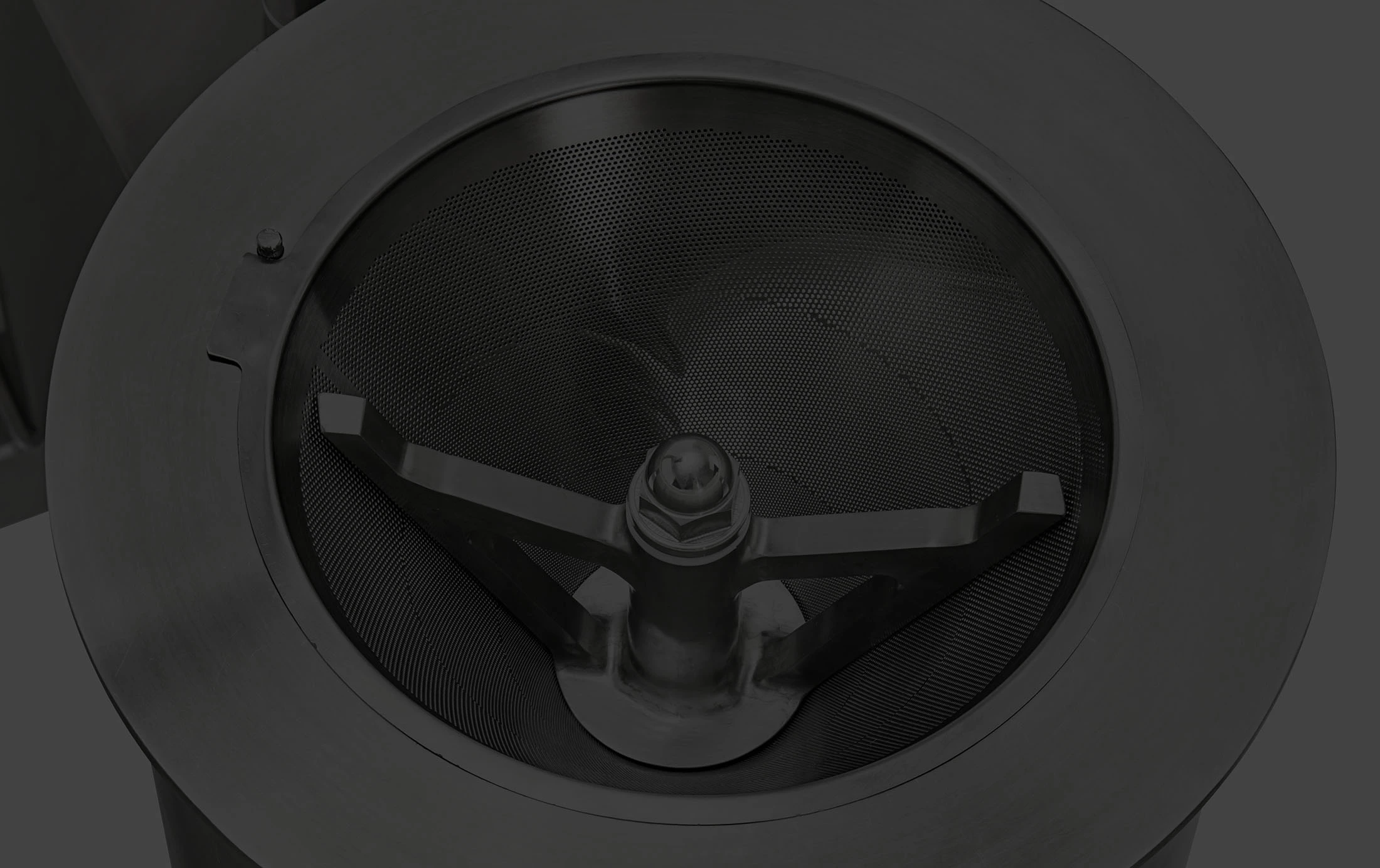


Moving a size reduction process from laboratory development to commercial production is one of the most important stages in pharmaceutical manufacturing. The decisions made during early formulation and process development can influence key factors like product quality, process efficiency, throughput, regulatory compliance, and long-term manufacturing costs throughout a product's lifecycle.
For that reason alone, a successful milling scale-up requires far more than just increasing batch size, or moving to a larger machine. Process engineers, formulation scientists, and technology transfer teams all need to understand how elements like particle size distribution, material characteristics, and operating parameters interact across different equipment platforms and production environments. Without a clear scale-up strategy, it can quickly give rise to delays, inconsistent product performance, and potentially costly manufacturing challenges.
In this guide, our team explore the essential principles that drive successful size reduction scale-up, highlighting the best way to maintain process consistency throughout increasing production volumes. We’ll also examine common scale-up pitfalls, key equipment considerations, and the practical steps that can help you move from laboratory trials to full-scale manufacturing.
Why is it often so challenging to scale up size reduction equipment from lab to production?
Many pharmaceutical manufacturers find that a milling process which performs well in the lab doesn't always deliver the same results at production scale. Even when the formulation remains unchanged, scaling up a process often introduces additional complexities that can influence overall milling performance and product quality.
Some of the most common challenges include:
- Maintaining a consistent particle size distribution across larger batch volumes
- Replicating laboratory results at higher throughput rates
- Managing variations in powder flow characteristics and material behavior
- Maintaining process efficiency while meeting quality specifications
For formulation scientists and process engineers, the success of a scale-up is highly dependent on having a detailed understanding of how these variables interact throughout the development pathway. It’s worth noting that, thankfully, there are a number of steps that process teams can take to address these challenges - including making sure to identify the correct screen and impeller configuration for production requirements, as well as successfully transferring process knowledge between R&D and manufacturing teams.
All this can be instrumental in creating a clear scale-up strategy that helps to reduce risk, accelerate technology transfer, and help your team to make informed decisions throughout the scale-up process.
What does a reliable milling scale-up pathway look like?
A reliable cone milling scale-up begins long before production equipment is installed. The most successful projects form a direct connection between laboratory development, pilot testing, and commercial manufacturing so that process knowledge can be carried through every stage of development.
For formulation scientists and process engineers, the objective is to understand how a material responds to size reduction, and to apply that understanding to achieve consistent performance at production scale. This requires teams to evaluate target particle size, process repeatability, equipment performance, product quality, and manufacturing efficiency under conditions that reflect future production demands.
A reliable scale-up pathway typically progresses through several stages:
- Laboratory feasibility testing
- Pilot-scale milling process validation
- Technology transfer preparation
- Commercial-scale implementation
A well-planned scale-up program will generate data at each stage to inform the next phase of development. Laboratory testing establishes initial process parameters and helps teams to understand how a material behaves during milling. Pilot-scale trials then provide an opportunity to validate those findings under higher throughput conditions before commercial manufacturing begins.
This approach helps teams to identify potential challenges early, refine their operating parameters, and make informed decisions throughout the production process. It also creates a stronger foundation for technology transfer by ensuring that all critical process knowledge is properly documented and understood before proceeding to scale up manufacturing.
Crucially, using the same core milling technology throughout laboratory, pilot, and production stages can help teams to apply their process knowledge consistently throughout each stage. This continuity can help to ensure a more predictable pathway from laboratory trials to full-scale production, helping to reduce uncertainty during scale-up and improve project timelines, as well as maintaining consistent product quality and process performance.

How do you keep particle size distribution consistent while increasing the throughput of your operations?
Maintaining particle size distribution during scale-up requires a firm understanding of which process variables have the greatest influence on milling performance, and how to maintain a firm control over them at production scale. There are various factors which can affect particle size distribution, including:
- Screen configuration
- Impeller design
- Tip speed
- Feed rate
- Material characteristics
In particular, changes in material flow, residence time, and milling dynamics can all influence the final particle size distribution if they’re not properly controlled. Development teams therefore need to establish how these variables affect their product early in the process, so that critical parameters can remain consistent throughout scale-up. (Another useful measure is to maintain continuity with the core milling technology across different stages, which we’ve already discussed above.)
Once the critical process parameters have been established, process teams often find scale-up trials valuable because they can make it a lot easier to evaluate milling performance under conditions that more closely reflect production requirements. By validating process parameters before full commercial implementation, manufacturers can increase throughput while maintaining the particle size distribution that their formulation and manufacturing process requires.
What equipment options can best help to support seamless milling scale-up from lab to production?
The equipment that you choose during the development phase can have a significant impact on the success of your scale-up program. While particle size targets may be achievable on a wide range of milling systems, your ability to maintain process consistency over different stages will often be dependent on how effectively your team’s process knowledge can be transferred between equipment platforms.
As we’ve covered above, this is one of the main reasons why so many pharmaceutical manufacturers look for milling technologies that provide a clear progression from laboratory-scale development to pilot and production environments. The ability to conduct trials across multiple scales can also provide valuable insight before any major capital decisions are made.
At Quadro, our scale-up pathway has been developed with these requirements in mind.
What solutions does Quadro provide?
Quadro’s SLS platform is designed for laboratory-scale development, process evaluation, and feasibility testing. It gives formulation scientists and process engineers an opportunity to assess material behavior, establish target particle size distributions, and generate the process data they need to inform their future scale-up decisions. Early-stage testing can also help teams to identify critical process parameters before moving into pilot-scale development.
Our SDx platform provides a pathway towards pilot and production-scale processing using the same core milling technology. Manufacturers can apply development knowledge across larger processing volumes while keeping their development and manufacturing objectives closely aligned. The platform also helps teams to validate their process parameters under production-relevant conditions, and to identify (and address) any potential scale-up risks before commercial implementation.
Both systems use exchangeable heads, which allow manufacturers to utilize multiple milling and particle processing capabilities on the same platform. At pilot and production scale, this provides greater flexibility to evaluate different processing approaches, accommodate changing product requirements, and optimize performance without introducing an entirely new equipment platform. It also helps to simplify the scale-up process by allowing different processing capabilities to be deployed within a consistent operating environment.
How does SMARTdetect technology simplify head changeovers and reduce operator error during scale-up?
Exchangeable head systems provide significant processing versatility across different milling applications. SMARTdetect technology builds on their advantages by further simplifying the changeover process - automatically recognizing the installed milling head and applying the appropriate RPM operating range. That means that operators don’t need to manually identify the correct speed limits for each configuration, which helps reduce the risk of incorrect setup parameters being entered during changeovers.
This is particularly useful in environments where multiple processing heads may be used across different applications - helping teams to maintain consistency between runs, reduce the potential for operator error, and improve operational efficiency.
How can you build a stronger business case for scalable milling equipment?
To build a strong business case, it’s always helpful to have clear evidence that a milling solution can contribute to development efficiency, successful technology transfer, operational consistency, and long-term manufacturing objectives. This is why so many organizations prioritize finding equipment that provides a clear pathway from laboratory development to commercial production.
As we’ve discussed throughout this guide, scalable milling platforms can deliver value in several areas:
- Greater continuity between development and production activities
- More effective application of process knowledge as manufacturing volumes increase
- Increased flexibility through exchangeable head systems
- Reduced scale-up risk and improved process consistency
- Greater confidence in commercial manufacturing outcomes
At Quadro, our application specialists work with manufacturers to solve scale-up challenges, validate process parameters, and generate the data needed to make informed investment decisions. Our experience across pharmaceutical milling applications helps teams to develop scalable processes and make more informed decisions as they progress towards full-scale commercial manufacturing.
As part of our services, we can also provide access to our Waterloo Technology Centre, which provides an environment in which you can conduct feasibility studies, process development work, and scale-up trials using laboratory, pilot, and production-scale equipment. It’s a useful way to evaluate your process under production-relevant conditions, before committing to a capital investment.