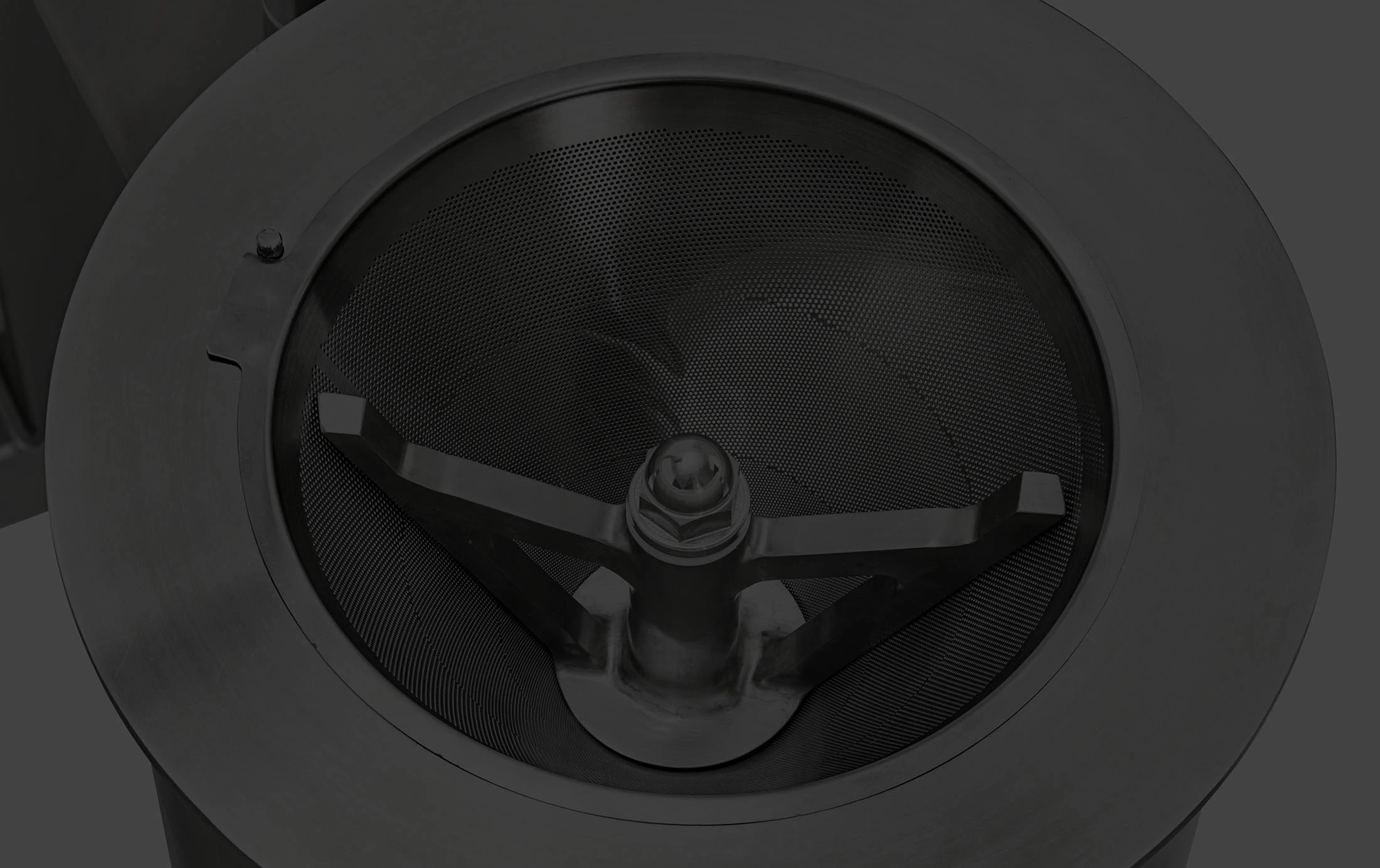
The process of cone milling is designed to be a typically gentle process. Quadro’s Comil, for example, is built to use as little energy and RPMs as possible so that unwanted heat is reduced even when it's processing materials sensitive to temperature.
So when there is an unexpected rise in temperature above the established operating baseline or validated process limits, operators shouldn’t consider this as just part of the milling process but instead as something that should be looked at and diagnosed.
In this piece we will outline six common causes of heat generation within the mill and what to look at to fix the issue before altering parameters randomly.
Firstly, establish where the heat is coming from
Start by establishing whether the concern is a rise in:
- Temperature of the milled product
- Heat around the milling chamber
- Abnormal heat from the drive or gearbox
Any temperature increase above ‘normal’ should be investigated even if throughput is unaffected. Review the tooling, operating parameters, feed conditions and material changes.
Excessive heat that is found near gearbox deserves an inspection of its own. And, should that heat be accompanied by unusual noises or vibrations, components should also be investigated.
Looking for the problem first rather than simply changing the RPM or tooling helps to reduce the risk of it being overlooked.
What are the 6 most common causes of heat in your cone mill — and how do you fix them?
1. Excessive residence time and over-grinding — restore efficient product flow
During a normal cone milling process, be it underdriven or overdriven, the material should leave the milling chamber through the screen once it's been reduced to the desired size. Should throughput drop and the material stay in the mill for longer than needed it will start to heat up as friction between the particles increases and the process becomes less efficient.
Longer processing times should be viewed as not only a productivity issue but as a cause of excess heat generation. The longer the residence time, the greater the chance of heat generation as a symptom. Look for what is preventing the material from passing through the mill during an accepted run time as opposed to just running the mill for longer.
Heat generation from poor product flow
First, check for screen blinding or a buildup of product which will be causing increased retention time. Examine any changes in the incoming material, the state of the tooling for wear, or improper gapping. Check downstream for any restrictions, poor discharge conditions can cause material backup, increased residence time and screen blinding even when the screen itself is not the root cause. Aim to fix the reason why product is staying longer in the chamber rather than compensating for it with additional milling.
2. Impeller speed set too high for the application — return to the validated operating range
Alongside the chosen screen and impeller, the impeller’s RPM or tip velocity is another one of the operating parameters used to control how material is processed in a Comil. Higher tip speeds can increase frictional heating but can also improve screen clearing and reduce product dwell time which means it doesn’t get the chance to heat up. The relationship is application-dependent and should be presented as a balance rather than a direct cause-effect relationship. Our Comils are built to suit heat-sensitive products, the required tip speed is determined by the application, material characteristics and desired particle size reduction, not solely by heat sensitivity..
As with many things related to cone milling, the equipment should be selected so that it can accommodate the product and create the desired result rather than altering parameters in an attempt to suit it.
Is your impeller speed generating unnecessary heat?
Compare current impeller speeds against the established parameters for that product and tooling combination. If speed has been increased to compensate for worn tooling, look to replace the worn tooling before treating lower RPM as the solution.
3. A worn, blinded, or incorrectly specified screen — restore an open and appropriate discharge path
A mill screen determines when sufficiently reduced particles can leave the chamber, but if the apertures that they move through are blocked, then product flow is restricted and the time to process the powder can increase. This will result in more rubbing and recirculation friction, which causes heat generation. A blinded screen is usually a symptom of something else such as material changes, worn tooling, improper tooling gapping or downstream flow restrictions.
Even screens that have no faults can be wrong for the application. Hole type and size are both variables, which means poor screen selection can just as easily influence how readily material passes through the mill as a worn or blinded one. Too large of a size reduction can keep materials in the chamber and build heat, whilst it can also blind from undersized particles if not clearing properly.
Is screen damage causing heat generation?
Carry out a deep inspection of the screen, looking for blockages, deformations, or cracks. If necessary, clean or replace the screen, but first verify that the screen type matches what the process requires rather than automatically fitting a replacement.

4. A worn impeller or an incorrect screen-impeller gap — check the tooling relationship
The performance of the screen and the impeller are interlinked, if they aren’t optimized together, then problems will arise.
The gap between the impeller and screen is a key part of efficient conical milling, some designs explicitly use spacers or spacerless designs to maintain an appropriate milling gap and avoid metal-to-metal contact.
If product isn’t being processed effectively then the residence time will increase running the risk of heating the materials.
Investigate the screen-impeller gap
Look at the impeller for worn leading edges or loss of its original profile. Then confirm the correct screen, impeller, and assembly arrangement is appropriate for that mill. Compensating for any of this by changing speed or feed conditions can prevent operators from fixing the problem.
5. Feed rate and feeding method issues — keep material moving consistently through the mill
The method of feeding the powder into the Comil is another process variable, and doing this inconsistently or with an unsuitable feeding method can change how materials enter, move, and exit through the milling zone. It is worth noting that starting a Comil with product already in the milling chamber or introducing product before the mill reaches operating speed can contribute to increased heat generation and poor product flow. Comil’s perform best when they are in steady state.
Is your feeding method generating heat?
Check if the feeding method has changed and whether material is bridging or entering intermittently. Inspect whether the current arrangement matches what is laid out in the established process parameters. Diagnose the underlying cause in the event the feed has been altered to compensate for another problem.
6. Heat-sensitive or difficult-to-mill material properties — configure the process around the product
Sometimes a mill can be operating as expected, but the material itself gives the process a lower tolerance for temperature increases. Materials that are sensitive to heat and sticky require precise tooling and equipment selection to mitigate the effects of these characteristics.
A formulation that softens or becomes more difficult to discharge as the temperature rises creates a negative process loop as more material obstructs the screen and further increases the heat in the mill.
How to address heat-sensitive materials
Review the process configuration as one application-specific combination rather than searching for one universal setting that can be used across a number of formulations. Particularly sensitive materials may need a different equipment configuration.
Once you have solved the heat problem, stop it coming back
Continue to monitor your cone mill once the temperature has returned to normal. By recording what has changed, operators are better able to recognize the same pattern before another batch is affected by irregular heat.
Regularly inspect screens and impellers and treat them as wear parts instead of waiting for something major to go wrong. Wear develops gradually and produces minor symptoms. Recognizing these early helps to prevent abnormal heat rises and other symptoms.
Additionally, keep validated tooling combinations (screen, impeller, operating parameters) associated with the relevant product instead of treating each component separately.
If excess heat is still an issue, don’t continually push existing parameters outside of the agreed operating window. Instead, discuss application-specific tooling or equipment options.
Unexpected cone mill heat is a symptom worth investigating
A cone mill should not simply be accepted if it is running hot, as low-energy conical milling is specifically selected by operators who want controlled size reduction without excessive temperature rise.
Start with the symptom, establish where the heat is occurring, and then work through the process logically.
If the correct cause is not obvious, application testing or a review of the operating parameters can provide a more reliable route forward than misjudged trial-and-error adjustments.